Technology is changing the way goods move across Nigeria.
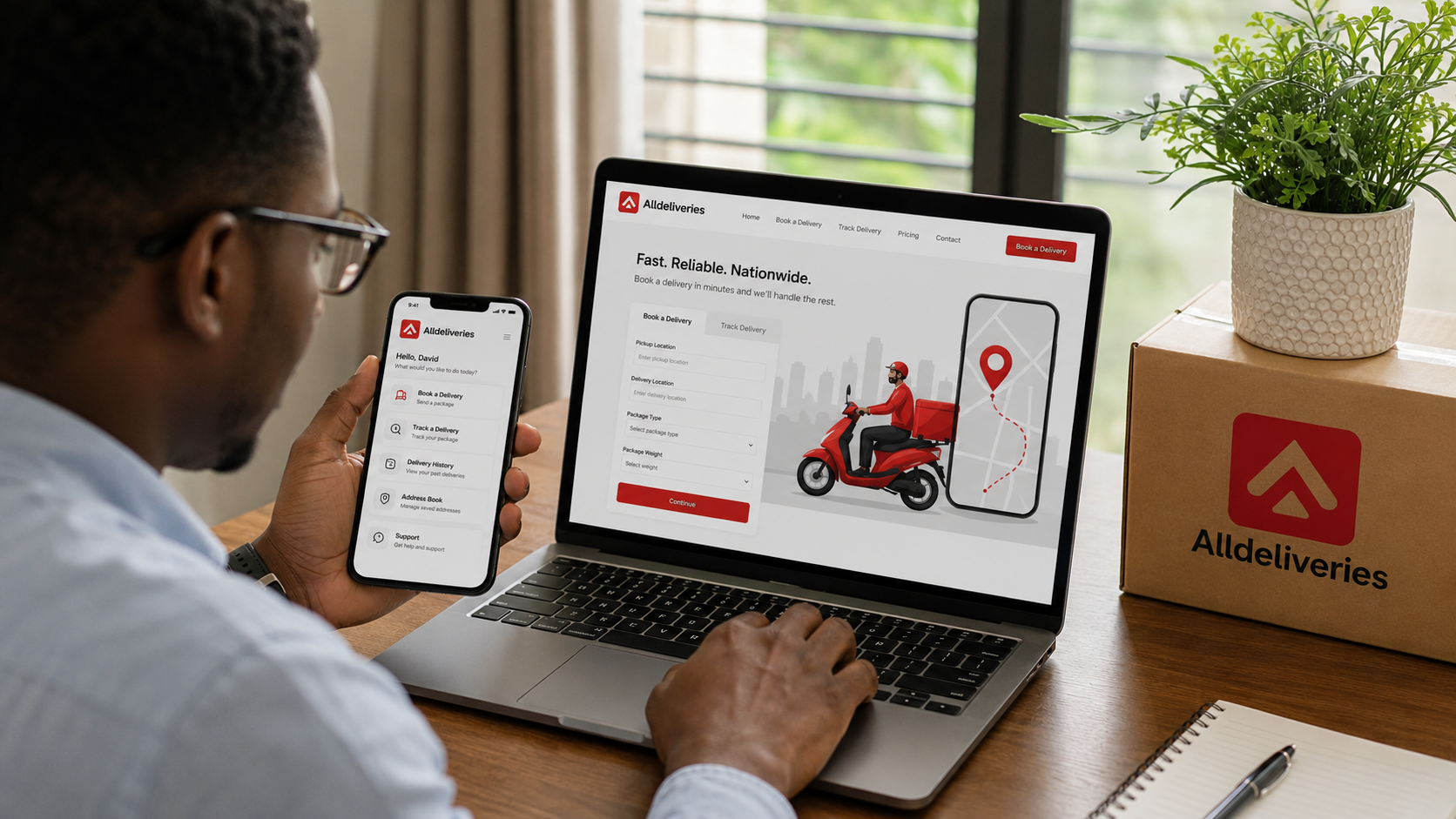
From online stores and courier companies to manufacturers, distributors, and other businesses, logistics operations are increasingly using digital tools to make deliveries more visible, organized, and efficient.
This shift is important because Nigerian logistics operators continue to deal with challenges such as traffic congestion, difficult addressing, infrastructure limitations, high operating costs, and complex last-mile deliveries. Recent research on Nigeria's logistics sector highlights digital mapping, mobile platforms, route optimization, and local delivery partnerships as important responses to these challenges.
Services You May Like
Technology cannot eliminate poor roads or traffic, but it can help businesses make better decisions despite these challenges.
1. GPS Tracking Gives Businesses Better Visibility
One of the most useful technologies in modern logistics is GPS tracking.
GPS-enabled systems can help businesses monitor the location of vehicles and shipments while they are in transit.
Instead of waiting for a driver or rider to call with an update, businesses can use digital systems to see where a shipment is and monitor its progress.
This can improve:
-
Shipment visibility
-
Fleet management
-
Customer communication
-
Delivery planning
-
Response to delays
Demand for GPS tracking and cargo-management systems is specifically identified as an opportunity for improving logistics efficiency in Nigeria.
2. Real-Time Tracking Improves the Customer Experience
Customers want to know what is happening after they place an order.
Technology allows courier companies and businesses to provide updates such as:
-
Order confirmed
-
Package picked up
-
In transit
-
Out for delivery
-
Delivered
Some systems can also provide live location information.
This reduces uncertainty and can reduce the number of customers contacting businesses simply to ask where their packages are.
Real-time tracking, proactive notifications, and digital customer-service tools are already being used by logistics operators to improve visibility and customer experience in Nigeria.
3. Route Optimization Helps Couriers Choose Better Routes
A courier does not necessarily need to take the shortest physical route.
The best route may depend on:
-
Traffic
-
Road conditions
-
Number of deliveries
-
Vehicle type
-
Current location
-
Delivery priorities
Route-optimization software can process these factors and recommend more efficient routes.
This can help reduce unnecessary travel and improve delivery productivity.
Recent research on Nigerian last-mile logistics identifies route optimization as one of the key technology-based approaches for addressing delivery challenges.
4. Digital Mapping Helps Solve Addressing Problems
Finding a customer's exact location can be one of the most difficult parts of last-mile delivery.
Digital mapping tools can help businesses use:
-
GPS coordinates
-
Digital maps
-
Geocoding
-
Location pins
-
Address databases
These tools can make difficult destinations easier to identify.
However, digital maps are not perfect. In areas where formal addressing is incomplete or inconsistent, local knowledge and accurate customer information remain important.
Technology works best when it is combined with reliable location data.
5. Automated Dispatching Makes Delivery Operations More Efficient
Businesses with many orders can struggle to decide which rider should handle which delivery.
Automated dispatch systems can help assign jobs based on factors such as:
-
Rider location
-
Delivery destination
-
Vehicle type
-
Package requirements
-
Current workload
This can reduce unnecessary movement and help businesses use their delivery teams more efficiently.
6. Artificial Intelligence Can Improve Logistics Planning
Artificial intelligence is increasingly being explored for logistics applications.
AI can help analyse large amounts of information and identify patterns that may be difficult to detect manually.
Potential applications include:
-
Route optimization
-
Demand forecasting
-
Delivery-time prediction
-
Fleet planning
-
Warehouse management
-
Identifying likely delivery bottlenecks
Research examining AI and last-mile logistics in Nigeria indicates that AI can help reduce operational bottlenecks, although adoption is still developing and the cost of technology remains a barrier for some businesses.
7. Technology Can Help Reduce Failed Deliveries
A failed delivery wastes time and money.
It may happen because:
-
The address is incorrect
-
The recipient is unavailable
-
The customer cannot be reached
-
The courier cannot locate the building
Digital tools can help reduce these problems through:
-
Address validation
-
Customer notifications
-
GPS locations
-
Automated reminders
-
Digital communication
For example, address-validation technology can help identify potential location problems before a courier begins the journey.
8. Digital Proof of Delivery Improves Accountability
Traditionally, delivery confirmation might rely on paper records or verbal confirmation.
Digital systems can provide electronic proof of delivery through methods such as:
-
Electronic signatures
-
One-time passwords
-
Photographs
-
Digital timestamps
-
Recipient confirmation
This creates a record showing that the delivery was completed.
It can be particularly useful when businesses need to investigate disputes.
9. Mobile Applications Connect Customers, Businesses, and Couriers
Mobile technology has made logistics services more accessible.
A customer may be able to use a mobile platform to:
-
Book a delivery
-
Enter an address
-
Pay for a shipment
-
Track a package
-
Receive notifications
-
Contact customer support
Businesses can also use mobile systems to monitor their shipments and communicate with delivery teams.
10. Automated Notifications Keep Customers Informed
Instead of manually contacting every customer, businesses can automate delivery notifications.
Messages can be triggered when:
-
An order is confirmed
-
A courier is assigned
-
A package is collected
-
A shipment is in transit
-
A courier is approaching
-
The package is delivered
This saves staff time while giving customers useful information.
11. Warehouse Management Systems Improve Order Fulfillment
Technology is also changing what happens before a package reaches the courier.
Warehouse management systems can help businesses monitor:
-
Inventory
-
Product locations
-
Incoming stock
-
Outgoing orders
-
Picking
-
Packing
Better warehouse organization can reduce the time required to prepare orders.
This is important because delivery speed depends not only on transportation but also on how quickly an order is processed before dispatch.
12. Data Helps Businesses Understand Delivery Performance
Technology allows businesses to collect and analyse logistics data.
Useful metrics include:
-
Average delivery time
-
On-time delivery rate
-
Failed delivery rate
-
Delivery cost per order
-
Rider productivity
-
Customer complaints
-
Return rates
Instead of relying on assumptions, businesses can use this information to identify recurring problems.
For example, if deliveries to one area repeatedly take longer than expected, the company can investigate the route, courier coverage, or customer-address data.
13. Technology Can Improve Fleet Management
Businesses operating several vehicles need to know how those vehicles are being used.
Fleet-management technology can help monitor:
-
Vehicle location
-
Travel routes
-
Mileage
-
Fuel usage
-
Maintenance schedules
-
Driver or rider activity
Better fleet visibility can help companies identify inefficient operations and plan maintenance before vehicle problems cause major disruptions.
14. Technology Supports E-Commerce Growth
The growth of online shopping has increased the need for reliable logistics.
Customers expect the products they purchase online to reach them safely and within a reasonable timeframe.
Technology helps connect the different stages of the process:
Online order → Inventory → Fulfillment → Dispatch → Transportation → Tracking → Delivery
Nigeria's logistics sector is increasingly tied to the growth of e-commerce, making better delivery technology important for businesses that sell online.
15. APIs Can Connect Online Stores to Logistics Systems
Businesses don't always need to manually enter every order into a courier platform.
Application programming interfaces, commonly called APIs, can allow different systems to communicate.
For example, an online store can potentially send order information directly to a logistics platform.
This can help automate:
-
Shipment creation
-
Delivery booking
-
Tracking updates
-
Order status changes
Automation reduces repetitive data entry and can lower the risk of manual errors.
16. Technology Can Support Nationwide Delivery Networks
Technology isn't only useful for major cities.
Digital logistics systems can help coordinate shipments between:
-
Warehouses
-
Distribution centres
-
Courier branches
-
Local delivery agents
-
Pickup locations
Nigeria's postal and logistics infrastructure also includes nationwide delivery, pickup, cargo, haulage, warehousing, and reverse-logistics services, showing how technology-supported coordination can operate across different stages of the logistics network.
17. Technology Can Improve Reverse Logistics
Returns are an important part of e-commerce.
A customer may need to return an item because it is:
-
Damaged
-
Incorrect
-
Defective
-
The wrong size
-
No longer wanted, where the seller's policy permits
Digital systems can help businesses track returned goods from the customer back to the seller.
This makes the return process easier to monitor and manage.
18. Technology Can Help Reduce Unnecessary Travel
Better route planning and delivery grouping can reduce the amount of distance travelled.
If several customers are located in the same area, a logistics system may help organize those deliveries efficiently instead of sending vehicles repeatedly across the city.
Reducing unnecessary travel can help businesses control:
-
Fuel consumption
-
Delivery time
-
Vehicle wear
-
Operating costs
Digitization research in Nigerian e-commerce logistics has also identified economic and environmental effects from digital logistics practices.
19. Technology Helps Businesses Scale
A small business may manage a few deliveries manually.
As order volume grows, manual processes become harder to manage.
Technology can help businesses handle larger numbers of shipments by automating tasks such as:
-
Dispatch
-
Tracking
-
Notifications
-
Inventory updates
-
Delivery confirmation
-
Reporting
This allows businesses to increase delivery volume without increasing manual administrative work at the same rate.
Technology Does Not Solve Every Logistics Problem
It is important not to treat technology as a complete solution.
A GPS system cannot repair a damaged road.
An AI route planner cannot eliminate traffic.
A tracking application cannot guarantee that a customer will be available when the courier arrives.
Technology improves coordination, information, and decision-making, but logistics still depends on people, vehicles, roads, warehouses, electricity, telecommunications, and other physical infrastructure. This distinction is important in Nigeria, where infrastructure and operating costs remain significant logistics constraints.
Challenges to Technology Adoption
Businesses may face obstacles when adopting logistics technology.
These can include:
-
High implementation costs
-
Limited technical expertise
-
Poor internet connectivity in some locations
-
Unreliable electricity
-
Staff training requirements
-
Integration difficulties
-
Data-quality problems
AI adoption in particular can be limited by the cost of acquiring and implementing advanced technology.
Businesses should therefore choose technology based on their actual needs rather than adopting complicated systems simply because they are new.
How Nigerian Businesses Can Use Logistics Technology Effectively
Businesses don't need to adopt every available technology at once.
A practical approach is to start with the biggest operational problem.
For example:
Problem: Customers constantly ask where their packages are.
Possible solution: Introduce shipment tracking and automated notifications.
Problem: Riders spend too much time searching for addresses.
Possible solution: Improve address collection and use digital mapping.
Problem: Fuel costs are too high.
Possible solution: Use route optimization and better delivery grouping.
Problem: Too much time is spent manually entering orders.
Possible solution: Integrate the online store with the logistics platform.
The best technology is the one that solves a real business problem.
Frequently Asked Questions
How is technology improving logistics in Nigeria?
Technology is improving logistics through GPS tracking, digital mapping, route optimization, automated dispatching, warehouse systems, real-time notifications, digital proof of delivery, and data analytics.
Can GPS reduce delivery delays?
GPS can help couriers navigate and allow businesses to monitor vehicles and shipments. It cannot eliminate traffic or poor road conditions, but it can improve route decisions and visibility.
Is artificial intelligence useful for Nigerian logistics?
Yes. AI can support route optimization, demand forecasting, delivery prediction, and other logistics decisions. However, adoption depends on cost, data quality, infrastructure, and technical capacity.
Can technology reduce delivery costs?
It can. Better routing, fleet management, delivery grouping, and automation can reduce unnecessary travel, fuel consumption, labour time, and administrative work.
Does technology replace human couriers?
No. Technology supports logistics workers rather than replacing the physical movement and handling of goods. Reliable delivery still requires people, vehicles, infrastructure, and effective operations.
Final Thoughts
Technology is becoming an increasingly important part of logistics in Nigeria.
GPS tracking gives businesses better visibility. Digital mapping helps with difficult locations. Route optimization can improve travel efficiency. Automated notifications keep customers informed. Warehouse systems improve order fulfillment, while AI and data analytics can help businesses make better operational decisions.
These technologies are particularly valuable in a country where logistics operations can be affected by traffic, infrastructure limitations, addressing problems, and high operating costs.
However, technology should be viewed as a tool rather than a complete solution.
The strongest logistics operations combine technology with reliable people, accurate information, good processes, suitable vehicles, and strong infrastructure.
For Nigerian businesses, adopting the right logistics technology can mean better visibility, fewer delivery problems, more efficient operations, and a smoother experience for customers.
Comments
No comments yet. Be the first to comment.