Lagos is Nigeria's major commercial and logistics hub, but moving goods around the city can be challenging. Heavy traffic on major roads can turn a relatively short delivery into a much longer journey.
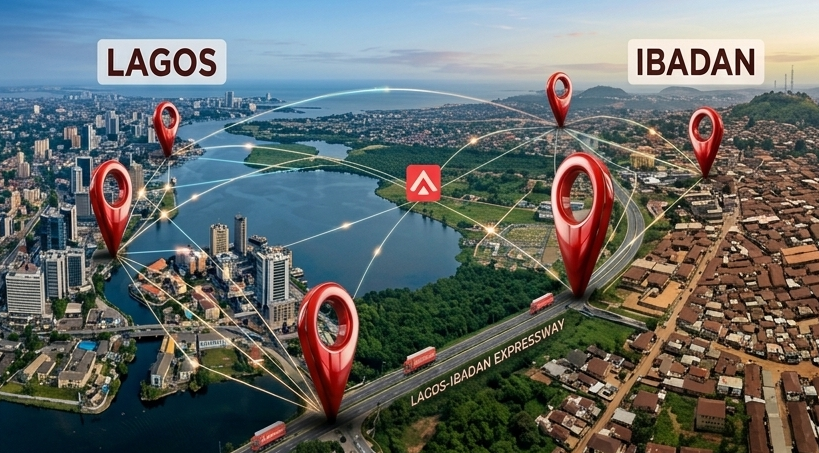
For courier companies, online businesses, and customers, this means that delivery time cannot always be predicted by distance alone. A destination that looks close on a map may take significantly longer to reach during periods of heavy congestion.
Traffic congestion is a recognized challenge for Nigerian businesses and logistics operations, while Lagos's size and economic importance make efficient movement particularly important.
Services You May Like
Understanding how traffic affects deliveries can help businesses provide more realistic estimates and help customers know what to expect.
Why Is Lagos Traffic Important for Delivery Services?
Delivery operations depend heavily on road transportation.
Motorcycles, cars, vans, and trucks must share the road with:
-
Private vehicles
-
Commercial buses
-
Ride-hailing vehicles
-
Heavy trucks
-
Public transportation
-
Other motorcycles
-
Pedestrians in busy commercial areas
When congestion increases, the amount of time required to move between pickup and delivery locations also increases.
The effect isn't limited to passenger travel. Freight and commercial transportation are affected as well, increasing the time and cost required to move goods.
1. Traffic Makes Delivery Times Harder to Predict
Imagine two delivery locations that are only a moderate distance apart.
During periods of light traffic, a rider may travel between them relatively quickly.
During peak traffic, the same journey may take considerably longer.
This is why distance alone cannot provide a perfectly accurate delivery estimate in Lagos.
Other factors must be considered, including:
-
Time of day
-
Current traffic conditions
-
Road construction
-
Accidents
-
Weather
-
Route availability
-
Pickup delays
Businesses should therefore avoid calculating delivery time using distance alone.
2. Rush-Hour Traffic Can Delay Deliveries
Traffic conditions can vary throughout the day.
Periods when large numbers of people are travelling to or from work can create significant congestion on major routes.
For delivery businesses, this means a package collected at one time of day may arrive considerably faster than an identical delivery booked during a heavily congested period.
Couriers can manage this by considering current traffic conditions when estimating arrival times.
3. Traffic Can Affect Same-Day Delivery
Same-day delivery means that a shipment is collected and delivered within the same day under the conditions of the courier's service.
Traffic can make this more difficult.
If several deliveries are scheduled and each rider spends additional time in congestion, later deliveries may be affected.
This is one reason customers should book urgent same-day deliveries as early as possible.
Businesses should also provide realistic cutoff times rather than accepting late bookings they may struggle to complete.
4. One Traffic Jam Can Affect Several Customers
A rider may have more than one delivery scheduled.
Suppose the first delivery becomes significantly delayed because of congestion.
The effect can continue throughout the schedule:
Delivery 1 delayed → Delivery 2 starts late → Delivery 3 starts later → remaining deliveries are affected.
This is sometimes called a cascading delay.
Good dispatch systems can reduce this problem by adjusting routes or reallocating deliveries when necessary.
5. Traffic Can Increase Delivery Costs
Congestion doesn't only consume time.
It can also increase operating expenses.
Vehicles sitting or moving slowly in traffic still consume fuel and operating resources. Drivers and riders also spend more working time completing fewer trips.
The U.S. International Trade Administration identifies inadequate road infrastructure and logistics inefficiencies as factors that raise costs and reduce competitiveness in Nigeria's logistics sector.
For delivery companies, increased operating costs can eventually influence delivery pricing.
6. Traffic Reduces the Number of Deliveries a Rider Can Complete
Every delivery rider has a limited number of working hours.
If a rider spends a significant portion of those hours in traffic, fewer packages can be completed during the day.
For example, time that could have been used for:
-
Picking up another package
-
Completing another delivery
-
Returning to a dispatch location
may instead be spent waiting in congestion.
This reduces operational efficiency.
7. Lagos's Commercial Areas Can Be Particularly Challenging
Some areas combine heavy commercial activity with significant movement of vehicles and goods.
Apapa is an obvious example because of its relationship with port and freight operations. The broader Lagos logistics system also handles substantial commercial and warehousing activity.
Deliveries involving busy markets, industrial areas, ports, or major commercial districts may therefore require additional planning.
Businesses should consider the destination rather than assuming every part of Lagos has identical delivery conditions.
8. Rain Can Make Traffic Delays Worse
Heavy rainfall can make Lagos deliveries more difficult.
Rain may:
-
Reduce vehicle speeds
-
Increase congestion
-
Affect visibility
-
Make some roads harder to navigate
-
Contribute to localized flooding
For motorcycle deliveries, severe weather can also create additional safety concerns.
Couriers should prioritize safety rather than encouraging riders to take unnecessary risks simply to meet an unrealistic delivery time.
9. Road Incidents Can Disrupt Planned Routes
Even a carefully planned delivery can encounter unexpected problems.
These might include:
-
Accidents
-
Broken-down vehicles
-
Road construction
-
Temporary road closures
-
Obstructions
When this happens, GPS navigation and live traffic information can help riders identify alternative routes.
However, alternative routes may themselves become congested as other drivers make the same adjustment.
10. Traffic Can Affect Customer Satisfaction
Customers usually judge a delivery based on whether their package arrives within the expected period.
Repeated unexplained delays can lead to:
-
Customer complaints
-
Negative reviews
-
Cancelled orders
-
Reduced confidence
-
Fewer repeat purchases
For online businesses, this is particularly important because customers may associate the courier's performance with the seller.
Good communication can make a significant difference when unavoidable traffic causes a delay.
How Courier Companies Can Reduce Traffic-Related Delays
Lagos traffic cannot simply be eliminated by a courier company, but its impact can be managed.
Useful strategies include:
Use Real-Time Navigation
GPS and traffic information can help riders identify congestion and select better available routes.
Assign Nearby Riders
Sending a rider from the opposite side of Lagos to collect a package can create unnecessary delays.
Where operationally possible, assigning riders close to pickup locations reduces the distance travelled before the delivery even begins.
Group Deliveries by Location
Deliveries going to nearby areas can sometimes be grouped efficiently.
This reduces unnecessary movement across the city.
However, grouping should be carefully managed so that it doesn't create excessive waiting times for individual customers.
Dispatch Urgent Packages Early
If a package must arrive within the same day, collecting it early provides more time to manage unexpected traffic.
Late-afternoon bookings naturally leave less room for delays.
Use Traffic-Aware Delivery Estimates
Businesses should avoid promising every customer the same delivery time.
Modern dispatch systems can consider:
-
Distance
-
Current traffic
-
Rider location
-
Delivery queue
-
Destination
This produces more realistic estimated arrival times.
What Online Businesses Can Do
Online businesses also have a role in reducing traffic-related delivery problems.
They can:
-
Prepare orders before riders arrive.
-
Verify customer addresses.
-
Dispatch orders promptly.
-
Avoid unrealistic delivery promises.
-
Notify customers when orders leave.
-
Work with reliable logistics providers.
-
Provide tracking information where available.
-
Communicate quickly when delays occur.
A courier shouldn't arrive at a business and spend another hour waiting for an order to be packaged.
Efficient preparation reduces the total time between purchase and delivery.
What Customers Can Do
Customers can make deliveries easier as well.
When booking or expecting a delivery:
-
Provide your complete address.
-
Include a useful landmark when necessary.
-
Use an active telephone number.
-
Keep your phone available.
-
Inform security or reception staff if appropriate.
-
Book urgent deliveries early.
-
Monitor tracking information.
-
Be available to receive the package.
A rider who has already spent significant time in traffic shouldn't then spend another 30 minutes trying to locate an incomplete address.
Why Accurate Addresses Matter Even More in Heavy Traffic
Consider what happens when a rider finally reaches the customer's area after navigating heavy traffic but cannot find the exact building.
The rider may need to:
-
Stop and call the customer.
-
Search surrounding streets.
-
Ask for directions.
-
Turn around.
-
Enter another congested road.
A small address mistake can therefore add significant time to an already delayed delivery.
Providing accurate location information from the beginning helps prevent this.
Should Businesses Guarantee Exact Delivery Times?
Businesses should be careful about guaranteeing exact arrival times when traffic conditions are unpredictable.
It is often better to provide a realistic delivery window.
For example, promising delivery within an appropriate period gives the courier some flexibility to respond to changing road conditions.
If a service genuinely guarantees a particular timeframe, the business should ensure its logistics operation can consistently support that commitment.
Speed Should Never Come Before Safety
Traffic delays can create pressure on delivery riders.
However, businesses should never encourage dangerous driving to compensate for congestion.
Riders should follow applicable traffic rules and operate their vehicles responsibly.
A late package can usually be explained and resolved.
A road accident can have far more serious consequences.
Reliable delivery means balancing speed, safety, accuracy, and customer expectations.
How Technology Can Help
Technology is becoming increasingly important in managing logistics challenges.
Useful tools include:
-
GPS navigation
-
Live traffic information
-
Route optimization
-
Automated dispatching
-
Real-time package tracking
-
Electronic proof of delivery
-
Customer notifications
Nigeria's logistics sector has identified technologies such as GPS tracking and modern logistics-management systems as opportunities for improving operational efficiency.
Technology cannot remove traffic from Lagos, but it can help couriers make better decisions around it.
Frequently Asked Questions
Why do Lagos deliveries sometimes take longer than expected?
Heavy traffic, weather, road incidents, difficult addresses, pickup delays, and other operational factors can increase delivery times.
Does a short distance guarantee fast delivery in Lagos?
No. Travel time depends on traffic and route conditions as well as physical distance.
What is the best way to avoid traffic-related delivery delays?
There is no guaranteed way to avoid all congestion, but early booking, route optimization, accurate addresses, nearby rider assignment, and realistic scheduling can reduce delays.
Can traffic increase delivery prices?
Yes. Persistent congestion can increase fuel use, vehicle operating time, labour requirements, and other logistics costs.
Should I book an urgent delivery early?
Yes. Booking earlier provides more time for the courier to deal with unexpected congestion or other delays.
Final Thoughts
Lagos traffic has a direct impact on delivery times because almost every local courier depends on the city's road network.
Congestion can increase travel time, raise operating costs, reduce the number of deliveries a rider can complete, and make estimated arrival times less predictable.
But traffic doesn't have to result in poor delivery service.
Courier companies can use better route planning, GPS technology, strategic rider assignment, realistic delivery estimates, and effective dispatch management. Businesses can prepare orders promptly and communicate clearly, while customers can provide accurate addresses and remain available to receive packages.
In a city where road conditions can change quickly, the goal shouldn't simply be to promise the fastest possible delivery.
The better objective is to provide a delivery service that is fast when conditions allow, realistic when they don't, and reliable throughout the entire journey.
Comments
No comments yet. Be the first to comment.